As the world becomes more interconnected, 5G technology stands at the forefront of transforming the digital landscape.
With promises of faster speeds, lower latency, and increased capacity, 5G is expected to fundamentally alter the way we live, work, and communicate.
5G is enhancing our daily lives across various sectors, including smart cities, healthcare, entertainment, and transportation.
Enhanced Connectivity and Speed
The most significant advantage of 5G over its predecessors is its speed.
5G can achieve speeds up to 100 times faster than 4G, which translates into download speeds that can exceed 10 gigabits per second (Gbps).
This speed boost enables ultra-fast data transfers.
It makes previously challenging tasks like downloading large files, streaming 4K and 8K videos, and online gaming almost instantaneous.
Impact
This increase will have a dramatic impact on industries that rely on fast, real-time data, including healthcare, manufacturing, and logistics.
With 5G, businesses will be able to make data-driven decisions faster and operate more efficiently.
Industries that rely on real-time data analytics, such as autonomous vehicle operations and remote medical surgeries, will benefit significantly from 5G’s capabilities.
Internet of Things (IoT) and Smart Cities
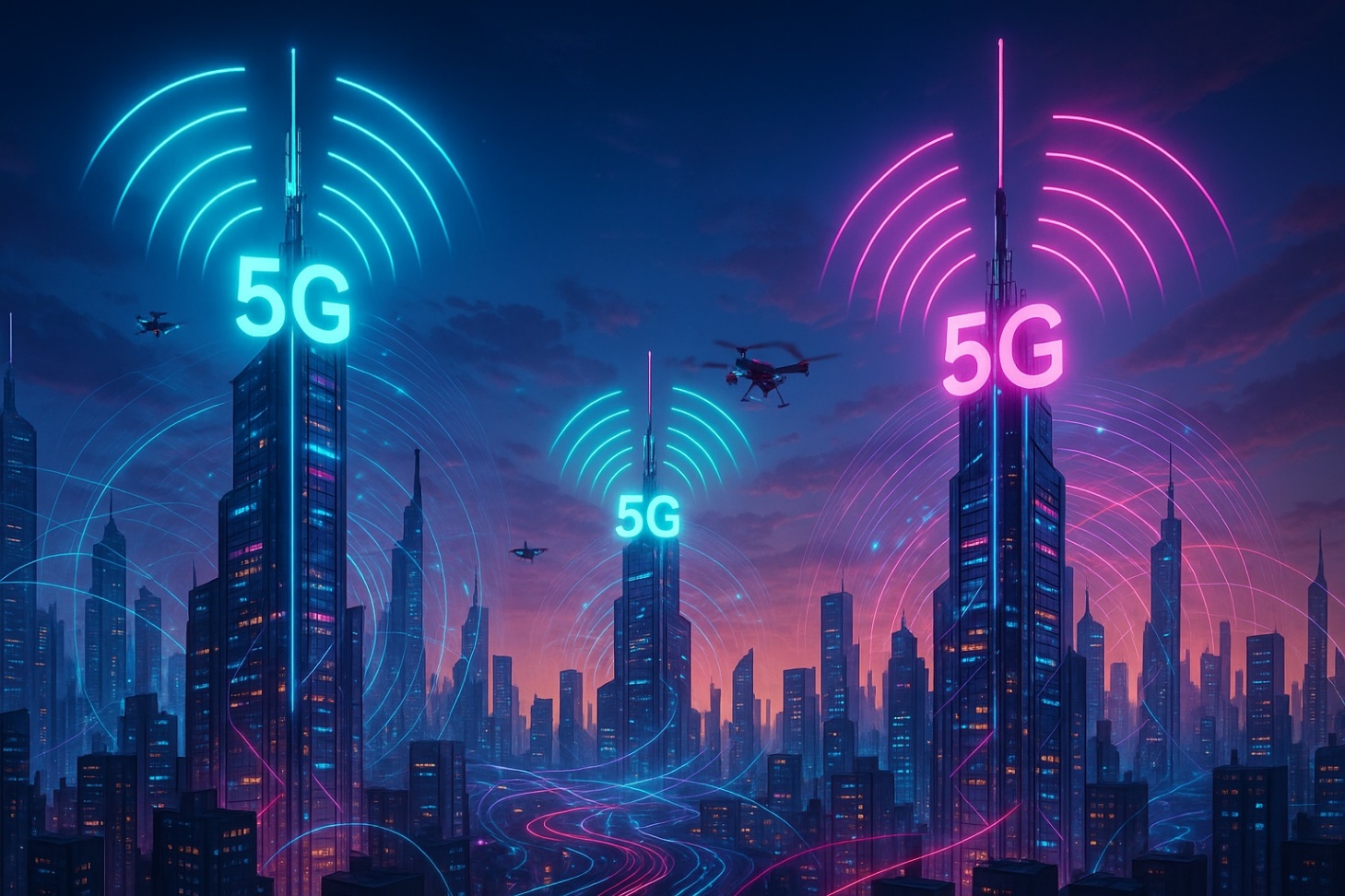
5G’s low latency and high capacity are critical for the expansion and functionality of the Internet of Things (IoT).
Billions of devices will be interconnected, from smart home gadgets like refrigerators and thermostats to sensors embedded in roads and vehicles.
This will lead to more intelligent and efficient cities that can respond to challenges such as traffic congestion, energy consumption, and pollution levels.
5G will provide the foundation for advanced applications such as real-time traffic management, smart parking, and environmental monitoring.
Advancements
With faster communication between devices, cities will be able to adjust to dynamic conditions in real-time.
For example, traffic lights can change based on real-time traffic data, reducing congestion and improving traffic flow.
Environmental sensors can monitor air quality, alerting authorities to pollution hotspots and enabling faster responses to air quality concerns.
Smart Growth
5G will also play a significant role in building the infrastructure for smart homes and offices.
Devices will be able to communicate seamlessly, allowing for advanced automation that can make daily life more convenient and efficient.
From managing energy usage to improving security, 5G will enhance the smart living experience, making homes more responsive to their residents’ needs.
Healthcare and Telemedicine Advancements
The healthcare industry stands to gain immensely from the deployment of 5G.
As the world continues to face challenges related to accessibility and healthcare costs, 5G provides a solution to some of the most pressing issues.
The ultra-reliable and low-latency communication will enable advancements in telemedicine, remote patient monitoring, and even remote surgeries.
Remotely Monitoring
5G’s ability to transmit large amounts of data quickly and reliably will allow doctors to monitor patients’ vital signs in real-time remotely.
This capability will be especially beneficial in rural or underserved regions, where access to healthcare professionals may be limited.
Remote consultations, once a novelty, will become a common method of delivering care, improving accessibility, and reducing the strain on local healthcare systems.
Operation
5G will also pave the way for remote surgeries and robotic-assisted procedures.
With real-time data transfer, surgeons can operate on patients remotely, with the precision required for delicate procedures.
This would be especially crucial in emergencies or for patients who need specialized care that isn’t readily available locally.
Augmented Reality (AR) and Virtual Reality (VR)
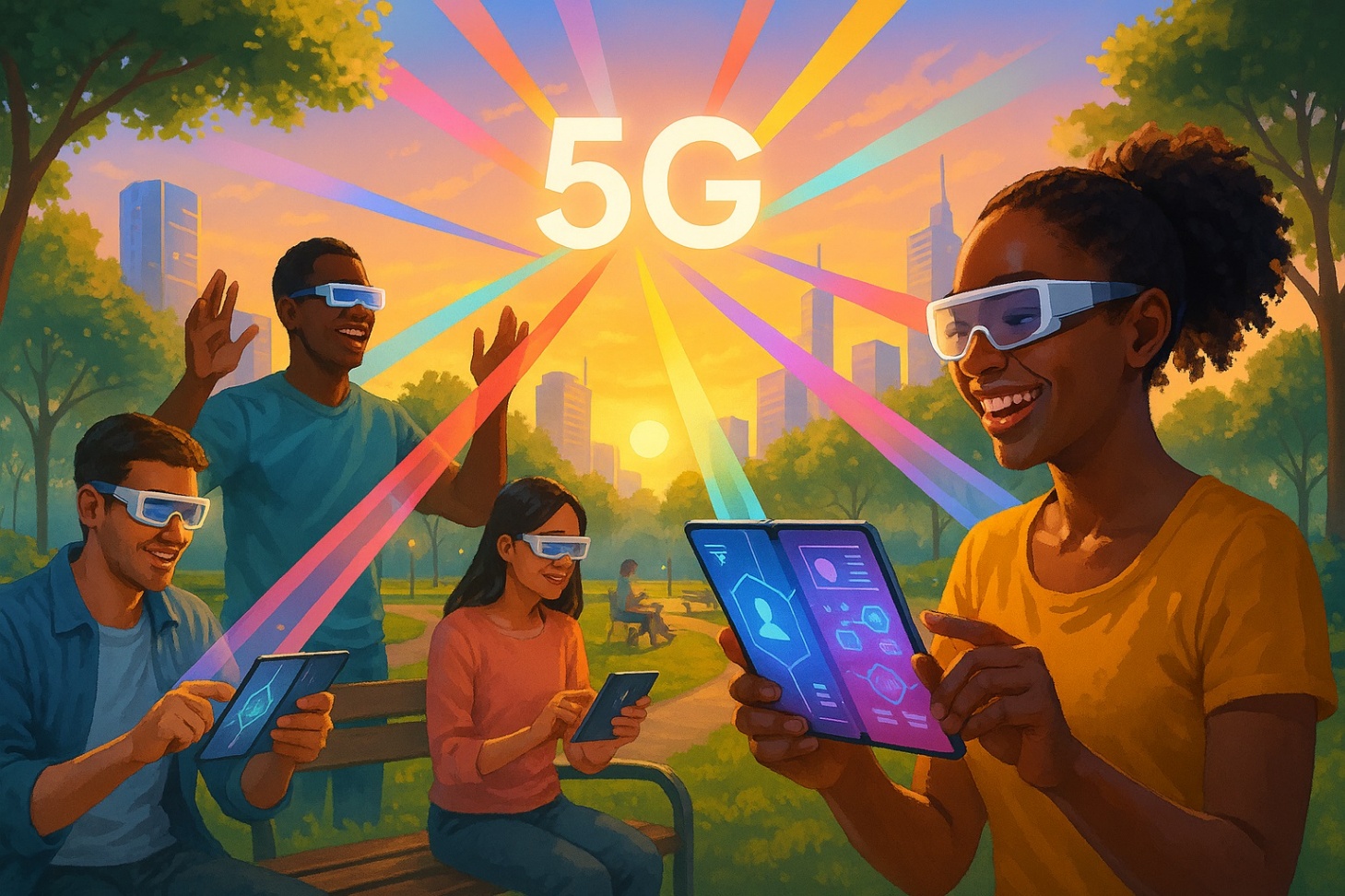
AR and VR technologies will become more accessible and impactful, creating new experiences for gaming, education, training, and healthcare.
In gaming, players can expect an experience where virtual worlds seamlessly blend with the real world, creating more interactive and engaging environments.
This can also extend to applications like virtual tourism, where users can visit remote destinations virtually without the need for physical travel.
Students and professionals can engage in immersive learning experiences that simulate real-world situations, improving retention and comprehension.
Autonomous Vehicles and Transportation
The introduction of autonomous vehicles (AVs) is one of the most talked-about advancements in the transportation sector, and 5G will be essential.
Self-driving cars rely on real-time data to navigate, communicate with each other, and respond to changes in the environment.
5G’s ultra-low latency and high capacity will ensure that AVs can respond in real-time to obstacles, traffic signals, and other vehicles.
It will enable communication between vehicles (vehicle-to-vehicle, V2V) and infrastructure (vehicle-to-infrastructure, V2I).
Enhancements
This technology will reduce traffic accidents, improve road safety, and enhance the flow of traffic.
Furthermore, logistics and delivery services will become more efficient with autonomous fleets, reducing costs and delivery times.
Beyond autonomous vehicles, it will improve the overall transportation infrastructure. This shift will ease congestion and make commuting faster and more efficient.
Economic Growth and Innovation
5G could add $13.2 trillion to the global economy by 2035, creating millions of jobs and fostering innovation across multiple sectors.
This economic boost will be driven by new business models, technological advancements, and the ability of industries to operate more efficiently.
5G will enable innovation in industries like manufacturing, agriculture, and entertainment.
- In manufacturing, for example, 5G will enable smart factories where machines communicate with each other in real time, leading to more efficient production processes.
- In agriculture, IoT devices connected through 5G will enable farmers to monitor crop health, automate irrigation, and optimize fertilizer usage, leading to more sustainable farming practices.
- The entertainment industry will also experience a transformation, with 5G enabling immersive experiences like live-streaming concerts in virtual reality, streaming of high-definition content without buffering, and more interactive and engaging online gaming.
5 G in Germany and France
Germany leans on private-licence “campus” networks to digitise factories and logistics hubs quickly.
It is piloting similar disclosures in 2025 but is still gathering baseline data via its nationwide measurement week.
France emphasises nationwide public coverage first, then vertical pilots. The aggressive 2 G/3 G shutdown is spurring IoT and lift-alarm retrofits.
Conclusion
5G technology is more than just an upgrade to existing networks; it is a gateway to new possibilities.
As we move towards a more connected world, the potential of 5G to drive innovation and economic growth is immense.
The future is bright, and as 5G becomes a reality, the opportunities it unlocks will shape the way we live, work, and connect.