Europe’s innovation landscape is rapidly evolving, driven by the twin imperatives of digital sovereignty and green transition.
Across sectors, EU institutions, startups, and global players are coalescing around breakthrough technologies poised to redefine industries.
Here are the top 10 emerging technologies gaining traction in Europe this year.
1. Autonomous Combat Aircraft & AI‑Piloted Drones
European defense startup Helsing has completed autonomous test flights of its AI-powered Centaur system aboard a Gripen E fighter jet over the Baltic Sea.
The system accrued the equivalent of one million flight hours in just 72 hours.
With full deployment expected by the end of this decade, these technologies signal a shift toward uncrewed combat aviation, with Europe at the forefront of the industry.
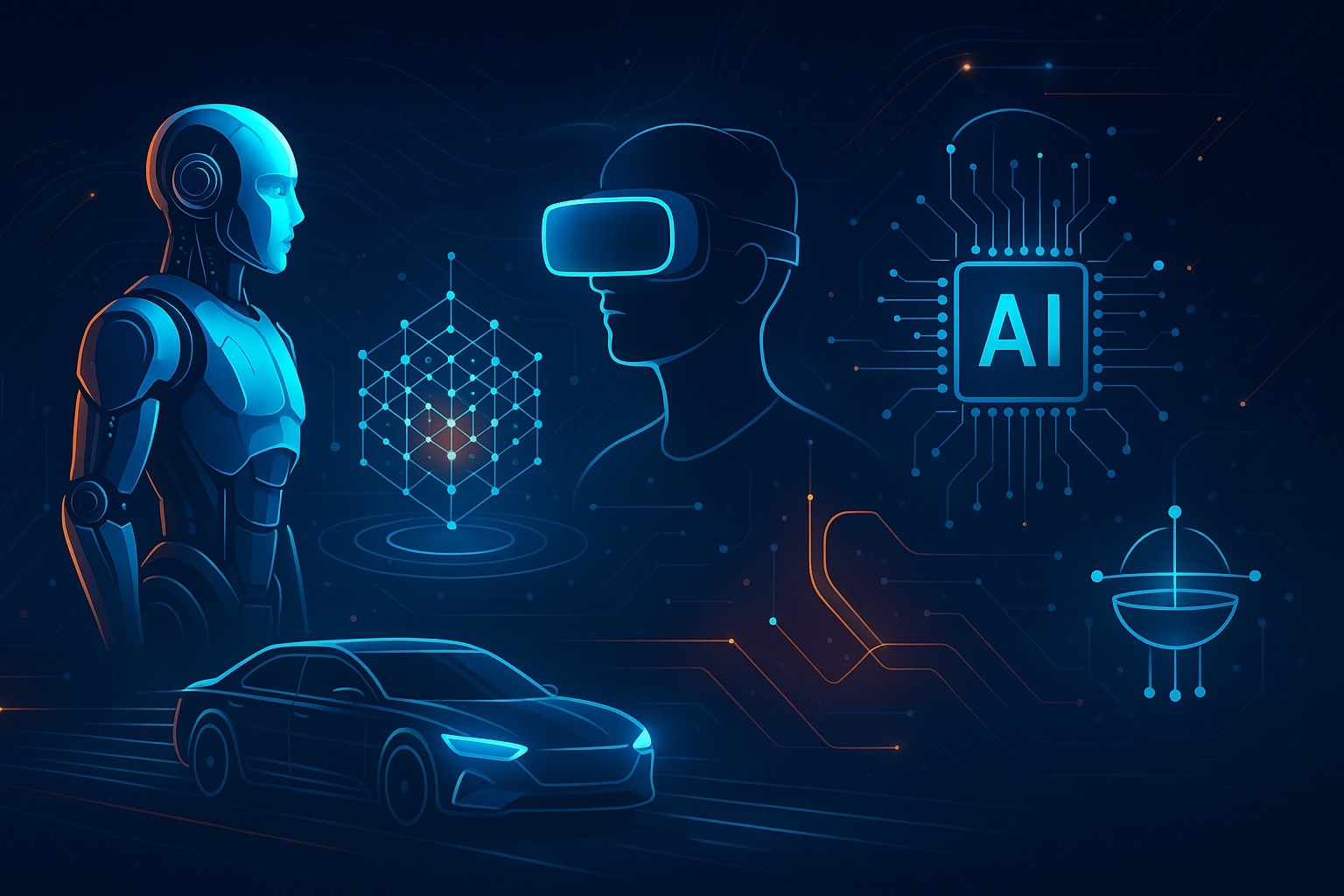
2. Quantum Computing & AI‑Quantum Convergence
The EU is significantly ramping up investments in quantum infrastructure.
Plans to finance quantum computing through Horizon Europe, a Scale-Up fund, and a pooled investment strategy targeting strategic independence.
In parallel, Nvidia is building hybrid quantum‑AI research facilities across Germany and France.
Demonstrating Europe’s serious commitment to quantum-enhanced artificial intelligence.
3. Pan‑European Supercomputing & AI “Gigafactories”
EuroHPC, a public–private EU partnership, has developed a network of high-performance supercomputers.
Examples include LUMI (Finland), Leonardo (Italy), MareNostrum 5 (Spain), and the upcoming exascale system Jupiter (Germany).
Also, plans for new data centers and AI “gigafactories” with over 100,000 GPUs each.
These facilities will enable Europe-wide research, modeling, and AI scale-up.
4. Green Hydrogen & Infrastructure Backbone
Under REPowerEU and the EU Hydrogen Strategy, Europe is building a green hydrogen economy.
They are aiming for 10 Mt of production and 10 Mt of imports by 2030, backed by investments from the European Hydrogen Bank.
Countries such as Germany, France, and Spain are rapidly expanding their electrolyzer capacity to decarbonize the transport, industry, power, and heating sectors.
5. Offshore Wind + Subsea Renewable Power Hubs
The North Sea leads Europe’s offshore energy expansion, with over 80 % of the EU’s offshore wind capacity to hit 120 GW by 2030 and 300 GW by 2050.
Denmark and the UK are scaling subsea cabling, offshore hydrogen production, and wind-to-e-methanol conversion.
They herald a new era in supranational energy infrastructure.
6. Structural Battery Composites & Advanced Energy Materials
According to the World Economic Forum’s Top 10 Emerging Technologies of 2025 report, structural battery composites are gaining importance.
They integrate energy storage directly into vehicles and aerial structures—
Europe’s automotive and aerospace innovators are investing heavily in these lightweight, dual-function materials to drive EV efficiency and range.
7. Digital Twins, AI‑Driven Agents & Spatial Computing
A recent EU Joint Research Centre study highlights Europe’s strong investment in digital twins, AI, and biotechnology.
Furthermore, market-watchers identify three major regional tech trends:
- Generative & agentic AI (€18.9 bn EU market, ~41 % annual growth)
- Spatial computing (AR/VR combined) with a projected value of €140 bn by 2037
- Ambient invisible intelligence—sensor‑driven, AI‑powered environments—focused on health and industrial efficiency
8. Reconfigurable Intelligent Surfaces & 6G Infrastructure
Europe is advancing beyond 5G toward 6G wireless systems.
Technologies such as terahertz communications, programmable metasurfaces (Reconfigurable Intelligent Surfaces, RIS), and drone-based networks.
RISE‑6G, a pan‑European research project, is piloting RIS to create programmable wireless environments, laying the foundations of next-gen 6G networks.
9. Secure Critical Communications & Civil‑Defense Technologies
The EU’s European Critical Communication System (EUCCS) aims to build a secure, interoperable communications platform.
This will boost emergency response across member states.
Meanwhile, Estonian-led initiatives like Plural and apps like Labrys are integrating geospatial, biometric, and crisis-response tools to enhance civil defense.
10. Health Tech Stockpiles & Wastewater Sentinel Systems
Post-COVID resilience efforts are transforming health technology R&D.
The EU has funded the Health Emergency Preparedness and Response Authority (HERA) with €200 million by 2027, emphasizing diagnostics, therapeutics, and vaccines.
It’s also building Systems for disease detection, such as the wastewater sentinel network at airports, reflecting an innovative trend in public health preparedness.
Strategic Investment & Policy Drivers
European institutions are fueling this technological surge.
The European Investment Bank plans to dedicate €70 billion (2025–2027) to key areas.
This includes clean tech, AI, computing, critical materials, security, robotics, and advanced materials.
At the same time, NATO’s Innovation Fund and EU sustainability goals are mobilizing resources toward defense autonomy, green transition, and digital resilience.
Unlocking Europe’s Competitive Edge
Collectively, these ten emerging technologies paint a portrait of a continent striving for strategic technological sovereignty.
They’re reducing dependency on non-EU providers in semiconductors, chips, quantum, and AI.
Next-generation energy systems (green hydrogen, offshore wind), defense tech, high-performance computing, and next-gen connectivity (6G, RIS).
The combination primes Europe for leadership in the green-digital era.
Why You Should Care
The top 10 emerging technologies in 2025 are essential for various sectors.
- For Investors & Policymakers: These sectors are rich in growth and geopolitical significance—from AI-quantum infrastructure to super green energy hubs.
- For Businesses & Entrepreneurs: Opportunities abound in hydrogen supply chains, battery composites, spatial computing apps, programmable networks, and biosentinels for health.
- For Citizens & Research Institutions: Emerging systems like EUCCS and digital twins promise improved resilience, healthcare outcomes, and environmental protections.
Looking Ahead
While timelines vary, most of these technologies are poised for commercialization or crucial deployment phases within the next 5 years:
- AI‑pilot trains and quantum–AI fusion will expand in the late 2020s.
- Supercomputing clusters, RIS‑powered 6G trials, and health sentinel networks will mature by 2027.
- Hydrogen economies and North Sea offshore grids aim for significant scale by 2030.
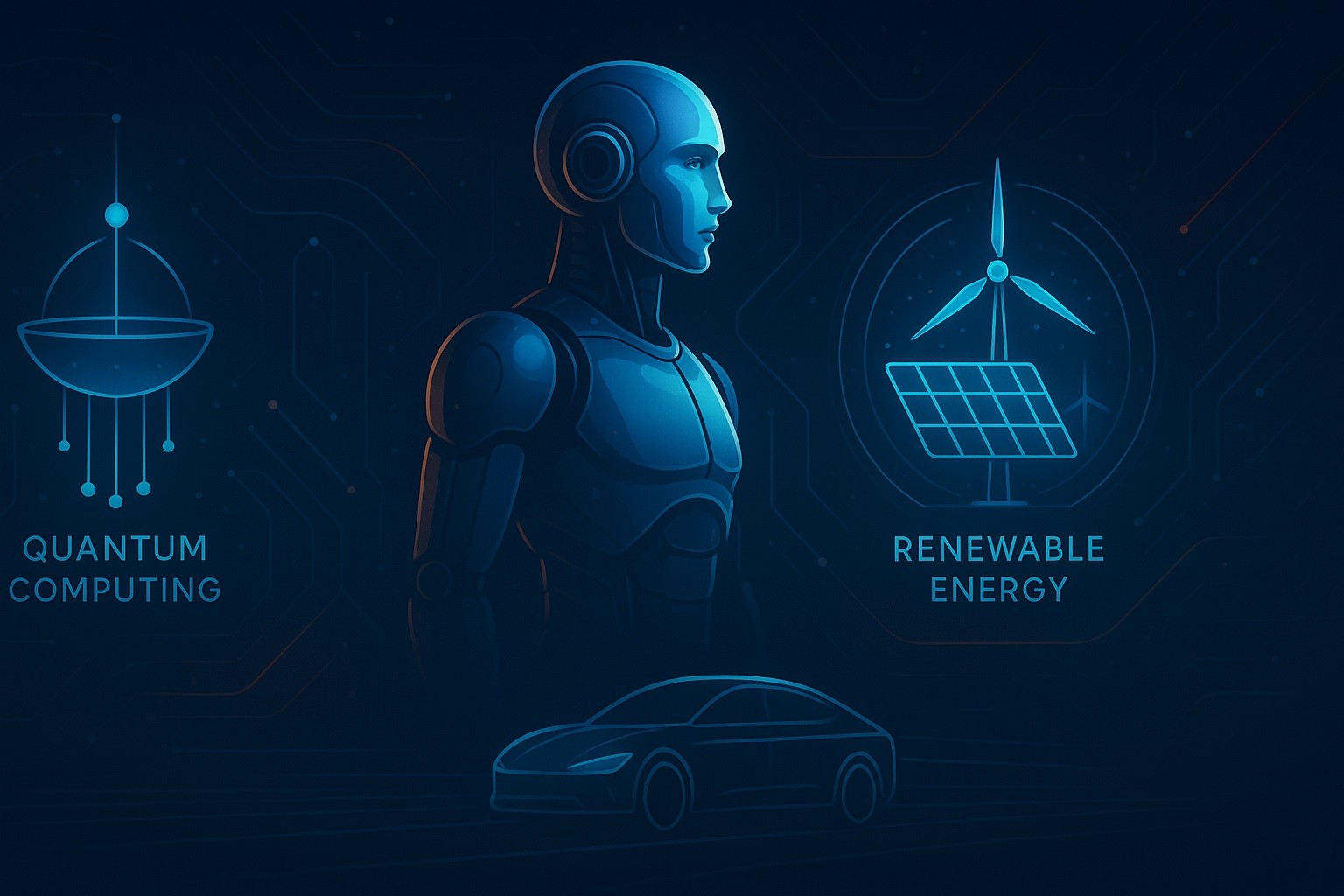
Visual Summary of Europe’s Tech Frontier
There is a summary of the top 10 emerging technologies you need to know about in 2025.
| Technology | Core Use Area | European Initiative |
|---|---|---|
| Autonomous jets & drones | Defense | Helsing x Saab |
| Quantum & AI | Infrastructure, R&D | Scale‑Up Fund, Nvidia |
| Supercomputing | HPC & AI | EuroHPC |
| Green Hydrogen | Energy | EU Hydrogen Bank |
| Offshore Wind & Renewables | Clean energy | North Sea hubs |
| Battery Composites | Mobility | WEF report |
| Digital Twins & AI | Industry, Healthcare | JRC, Contextual Solutions |
| 6G & RIS | Telecom | RISE‑6G network trials |
| Critical Communications | Safety | EUCCS crisis systems |
| Health Stockpiles | Public health | HERA, sentinel networks |
Final Thoughts on the Top 10 Emerging Technologies in 2025
Europe is orchestrating an extraordinary pivot toward cutting-edge, sovereign, and sustainable technologies.
In this era of simultaneous green and digital revolutions, European innovators stand on the cusp of delivering transformative solutions at scale.
As we proceed through 2025, keep an eye on these ten technology clusters—they represent not just innovation, but structural pillars.