A painting career lets you earn steady pay while turning blank surfaces into polished finishes worldwide.
This guide shows you how to meet hiring standards, promote your skills, and secure painter roles faster than rivals.
Is Painting a Growing Career in Brazil?
Growing renovation activity and new construction keep skilled painters in demand across residential, commercial, and industrial projects.
Firms value precise workmanship and dependable schedules, so qualified applicants rarely wait long for offers.
Key Growth Drivers:
- Urban redevelopment boosts apartment and office revamps.
- Aging housing stock requires regular exterior maintenance.
- Homeowners invest in décor upgrades that demand custom finishes.
Average Pay and Earning Potential
Compensation varies by region, project scale, and specialty, yet most full-time painters earn comfortable hourly wages plus overtime.

In the United States, recent data shows a midpoint near USD 18.63 per hour, while bridge, tower, and industrial-coating roles often command higher rates.
Globally, wages adjust to local costs of living, and contractors frequently negotiate premiums for night shifts, height work, or hazardous coatings.
What You Will Do on Site
Expect physical activity and detailed surface preparation before any color is applied to a wall.
Typical responsibilities include:
- Protecting floors, fixtures, and landscaping with drop cloths or masking film.
- Cleaning, sanding, and patching surfaces until they accept new coatings evenly.
- Applying primers that bond finishes to wood, masonry, or metal substrates.
- Mixing paints, stains, or industrial coatings to match exact color formulas or durability specs.
- Delivering smooth coverage using brushes, rollers, or airless spray rigs.
- Creating textured or decorative effects such as ragging, sponging, or metallic glazing.
Essential Skills and Attributes
Employers hire painters who combine stamina with precision. You need reliable technique and an eye for uniform coverage across broad areas.
Core abilities recruiters check:
- Endurance and balance for climbing ladders, kneeling, and reaching overhead throughout long shifts.
- Tool mastery covering brushes, rollers, HVLP spray guns, and power sanders without safety incidents.
- Color accuracy that prevents visible lap marks or mismatched touch-ups.
- Surface diagnosis to identify moisture problems, rust, or chalking before coatings fail.
- Job-site communication so that supervisors, designers, and clients stay updated on progress and any issues.
Qualifications and Training Pathways
Formal licensing differs worldwide, yet most hiring managers expect a basic education and proof you can work safely.
- Secondary-school completion or an equivalent credential satisfies the minimum academic requirement for many entry-level openings.
- Apprenticeships lasting two to three years teach surface preparation, coating chemistry, and blueprint reading while paying a graduated wage.
- Short safety courses on respirator use, fall protection, and lead-safe practices demonstrate compliance with global regulations.
- Portfolio evidence of previous residential rooms, commercial façades, or specialty finishes convinces clients you can replicate results.
Industry Outlook Through 2030
Forecasts suggest worldwide painter employment will keep pace with general labor growth.
Analysts attribute the outlook to energy-efficient retrofits, infrastructure upgrades, and a steady pipeline of private remodeling projects.
Employers also report persistent shortages of applicants who can manage complex coating systems, so motivated newcomers enjoy favorable bargaining power.
Seven Proven Ways to Find Painting Work
A clear game plan turns skills into contracts quickly. Follow these steps in order, refining each tactic as your reputation grows.
1. Build Professional Branding
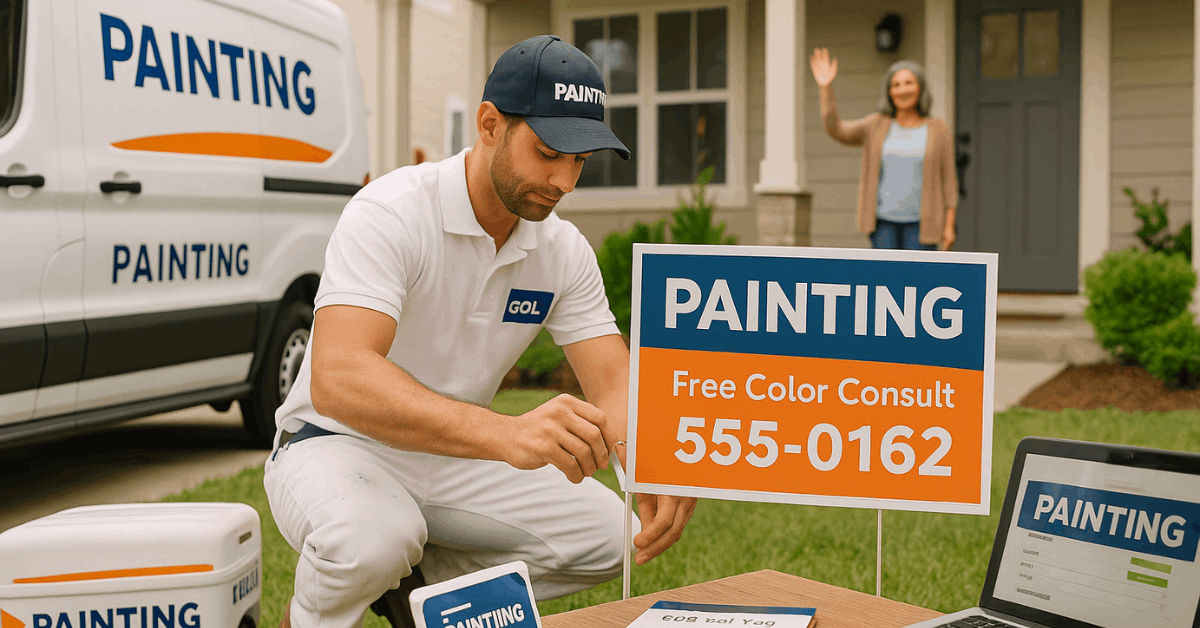
Craft a memorable business name, clean logo, and consistent color scheme. Display them on business cards, company shirts, vehicle decals, and a simple website showing high-resolution project photos.
2. Sweeten Initial Offers for Friends and Family
Launch with discounted rates for relatives or close contacts. Positive word-of-mouth plus photo evidence from those jobs provides instant social proof to future clients.
3. Knock on Doors Strategically
Visit neighborhoods where exterior paint looks worn. Wear branded clothing, carry brochures, and offer free walk-around assessments. Homeowners appreciate seeing potential improvements on the spot.
4. Strengthen Digital Presence
Optimize your site for search terms like “interior painter near me” or “commercial repaint experts.” Post weekly project updates on social channels and request online reviews the moment a job wraps.
5. Actively Contact Leads Online
Monitor community forums, buying-and-selling groups, and property-management listings. When someone mentions painting needs, introduce yourself politely, link to your portfolio, and propose a free estimate.
6. Encourage Ongoing Referrals
Set up a referral program: every client who sends you new work earns a gift card, service discount, or seasonal maintenance touch-up. Thank them publicly (with permission) to reinforce goodwill.
7. Network With Construction Professionals
Form alliances with real-estate agents, interior designers, roofers, and remodeling contractors. Offer package pricing or scheduling priority when they bundle your services into their projects.
Marketing and Networking Tactics That Convert
Short introductory line: A diversified outreach plan keeps your schedule full even during seasonal slowdowns.
High-impact ideas:
- Place temporary yard signs at current job sites so neighbors see real-time proof of quality.
- Sponsor a home-improvement podcast or local DIY channel that attracts property owners.
- Exchange backlinks with complementary trades, boosting search rankings for both partners.
- Showcase before-and-after galleries on social platforms popular in your region.
Incentives That Motivate Prospects
Short introductory line: Small perks often persuade undecided customers to sign sooner.
| Incentive Type | How It Helps You | What Clients Receive |
| Free color consultation | Demonstrates expertise, upsells premium coatings | Personalized palette and finish recommendations |
| Loyalty points | Encourages future projects | Credit toward touch-ups or accent walls |
| Limited-time discount | Fills gaps in your calendar | Immediate cost savings |
| Branded merchandise | Spreads your logo in public | Useful items like water bottles or canvas totes |
| Annual prize draw | Keeps your name in mind long term | Chance to win a complimentary room refresh |
Specialize to Stand Out
Focusing on a niche elevates rates and referral quality.
You might master historic restoration finishes, waterproof elastomeric systems, or high-altitude coatings on wind turbines. Highlight certifications and project photos that prove your specialty instead of listing every possible service.
Growing Through Collaboration and Repeat Business
Staying busy becomes easier when satisfied clients return.
After finishing an exterior makeover, remind the owner that you also handle interiors, decks, or garage floors. Schedule annual inspections to catch peeling early, saving the client money and generating steady work for you.
When capacity allows, assist veteran painters on large contracts; you gain advanced techniques and future subcontracting invitations.
Conclusion
Create a skills inventory, gather project photos, and assemble basic protective equipment. Update your résumé or craft a concise contractor profile emphasizing endurance, attention to detail, and safe tool use.
Start contacting local builders and property managers today, and refine your marketing touches every week. Consistent action secures painter jobs worldwide faster than any single advertisement.