Artificial intelligence is no longer a concept of the future—it’s actively changing the way technology works today.
From healthcare to transportation, AI is driving innovation and improving efficiency across industries.
This article examines how AI is shaping the future of technology and its implications for your everyday life.
AI’s Impact on Key Technology Sectors
Artificial intelligence is transforming the way industries operate by automating tasks, enhancing accuracy, and enabling smarter decision-making.
These changes are not limited to one field—AI is having a clear impact across healthcare, finance, transportation, and many other areas.
Here are the key sectors being reshaped by AI:
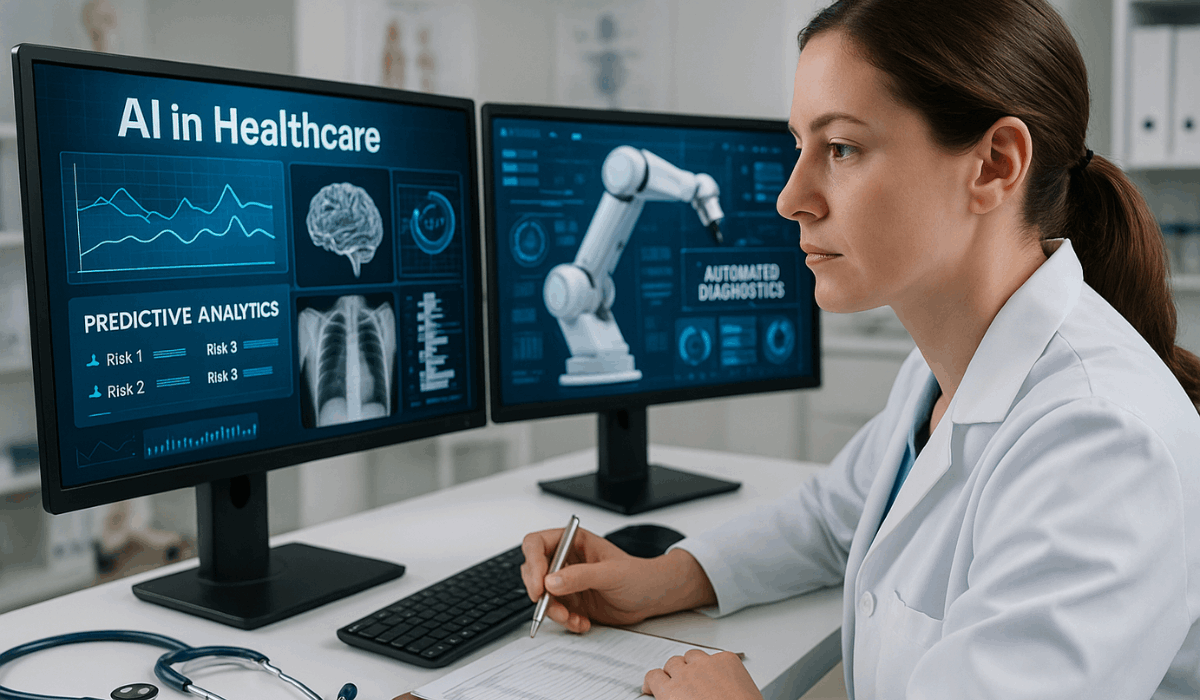
Healthcare
- AI analyzes scans and medical images faster than humans.
- Predictive models enable doctors to create personalized treatment plans.
- Virtual assistants support patient care and monitor symptoms.
Transportation
- AI powers self-driving cars and delivery robots.
- Traffic systems use AI to reduce congestion.
- Logistics companies use it for route and load optimization.
Finance
- AI detects fraud through real-time transaction analysis.
- Robo-advisors provide automated investment recommendations.
- Banks use AI chatbots for faster customer support.
Education
- Personalized learning platforms adapt to meet the individual needs of students.
- AI can automate grading and suggest learning materials.
- Language and speech tools assist with communication skills.
Manufacturing and Robotics
- AI-driven machines detect product defects instantly.
- Predictive maintenance prevents costly equipment failures.
- Robots collaborate with humans on the production floor.
Emerging AI Technologies Driving Change
As AI continues to evolve, new technologies are opening the door to smarter tools, faster processing, and more personalized experiences.
These emerging systems are becoming the backbone of innovation in multiple fields. Here’s a breakdown of the top AI technologies driving transformation:
Natural Language Processing (NLP)
- Helps machines understand and respond to human language.
- Powers chatbots, translation tools, and virtual assistants.
- Enables voice-controlled devices and real-time communication.
Computer Vision
- Allows machines to process and analyze visual data.
- Used in facial recognition, surveillance, and quality control.
- Helps self-driving cars detect lanes, signs, and objects.
Generative AI
- Creates original content like text, images, and audio.
- Used in writing tools, design platforms, and video editing.
- Speeds up creative tasks with AI-generated drafts and templates.
AI Chips and Edge Computing
- Special hardware accelerates AI processing locally.
- Reduces delay by analyzing data directly on devices.
- Essential for real-time AI in mobile and IoT devices.
How AI Is Powering Everyday Life
AI isn’t just for advanced industries—it’s now part of your daily routine.
From your smartphone to your smart home, AI makes devices faster, smarter, and more personalized.
Here’s how AI is shaping your everyday experiences:
Smart Assistants
- Devices like Alexa, Siri, and Google Assistant use AI to answer questions.
- They help you set reminders, play music, and control smart home devices.
- Voice recognition improves over time as your usage patterns evolve.
Personalized Recommendations
- AI suggests what to watch, listen to, or buy based on your habits.
- Services like Netflix, YouTube, and Amazon rely on this data.
- This helps tailor content and improve your user experience.
Smartphones and Cameras
- AI enhances image quality and suggests photo improvements.
- Voice-to-text and predictive text features rely on AI.
- Phone batteries last longer thanks to AI-powered energy optimization.
Home Automation
- AI controls lighting, temperature, and security systems.
- Learns your schedule to automate settings and save energy.
- Supports remote control through apps and voice commands.
New and Emerging Applications
AI is expanding into new areas that were once untouched by automation or machine learning.
These emerging uses are solving complex problems and introducing smarter ways to handle daily tasks. Here’s where AI is making new ground:
AI in Cybersecurity
- Detects threats in real-time by analyzing behavioral patterns.
- Automates response to potential breaches.
- Reduces false alarms and improves overall security accuracy.
AI in Agriculture
- Analyzes crop health using drones and sensors to optimize crop management.
- Optimizes irrigation and fertilizer use based on data.
- Forecasts yield and weather for better planning.
AI in Legal and Compliance
- Scans documents for key clauses and legal risks.
- Assists in drafting contracts and legal summaries.
- Speeds up case research and risk assessments.
AI in Climate and Environment
- Models climate change scenarios using big data.
- Tracks pollution and deforestation in real time.
- Supports smart energy grids and resource optimization.
Challenges and Ethical Concerns
While AI offers significant benefits, it also poses serious risks and raises ethical questions.
These issues need attention to ensure AI is used responsibly and fairly. Here are the key concerns shaping the AI conversation:
Job Displacement
- Automation can replace routine human jobs.
- Specific industries may face large-scale layoffs.
- Workers need reskilling to adapt to new roles.
Data Privacy
- AI systems collect and analyze vast amounts of personal data.
- Improper handling can lead to privacy violations.
- Strong safeguards and regulations are necessary.
Algorithmic Bias
- AI can reflect human biases in training data.
- Biased outcomes may harm specific groups.
- Developers must ensure fairness and accountability.
Lack of Transparency
- Many AI systems operate as “black boxes.”
- Users often lack insight into how decisions are made.
- Explainable AI is crucial for trust and oversight.
AI in Government and Public Services
Governments are using AI to improve how they serve citizens.
It cuts paperwork, predicts needs, and speeds up services. Here’s how it’s being used:
Automating Administrative Tasks
- Speeds up document processing and approvals.
- Reduces human error in routine operations.
- Frees up staff to focus on complex issues.
Urban Planning and Infrastructure
- Analyzes traffic, population, and energy data.
- Helps design smarter, more sustainable cities.
- Supports long-term infrastructure forecasting.
Public Safety and Security
- Uses predictive analytics to identify high-risk areas.
- Enhances surveillance with facial and pattern recognition.
- Supports emergency response planning and coordination.
Citizen Services and Support
- Chatbots assist with common inquiries and form submissions.
- AI systems guide people to the right departments.
- Improves response times for public complaints and requests.
AI and the Future of Work
AI is changing how, where, and what kind of work gets done. As automation grows, so does the need for human skills that machines can’t replace.
Here’s what AI means for the future of your work:
Evolving Job Roles
- Routine tasks are being automated in many industries.
- New roles are emerging in AI support and development.
- Hybrid jobs now mix technical and soft skills.
Focus on Human Skills
- Creativity, problem-solving, and emotional intelligence become increasingly valuable.
- Human judgment remains essential in decision-making.
- Collaboration between humans and AI is becoming the norm.
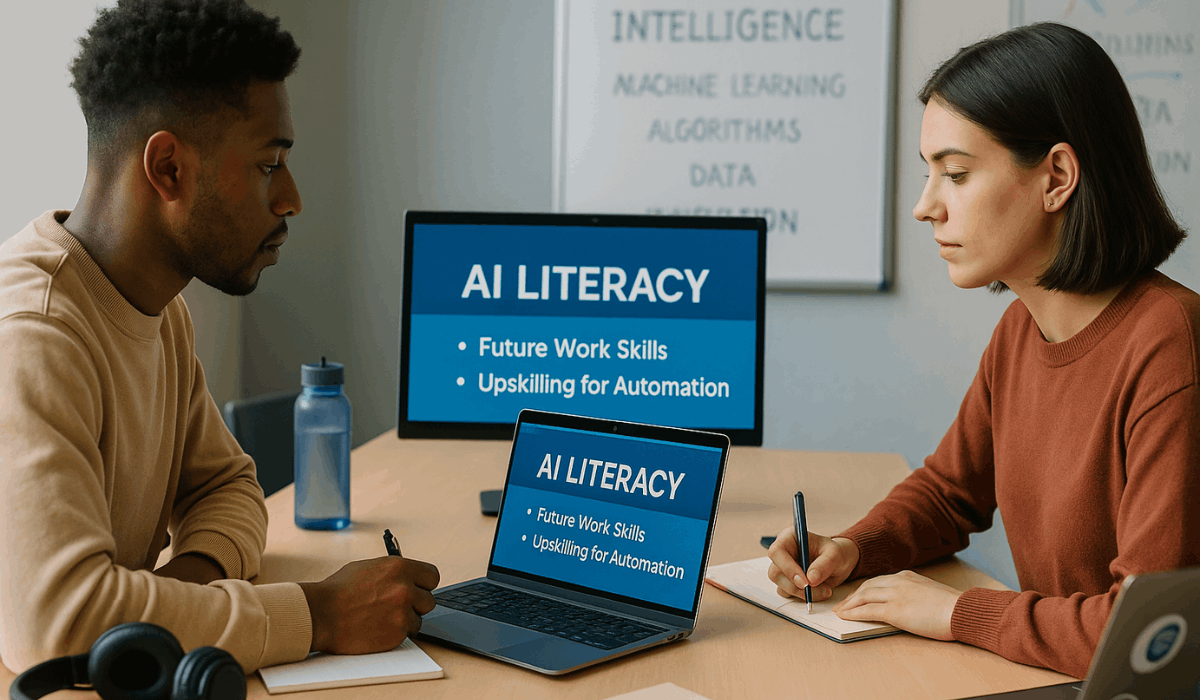
Upskilling and Lifelong Learning
- Workers need to learn digital tools and data basics.
- Training in AI literacy is becoming common.
- Employers are offering more reskilling programs.
Flexible Work Environments
- AI supports remote work with smart collaboration tools.
- Automates scheduling, reporting, and task management.
- Enables leaner teams with broader reach and output.
Opportunities AI Brings for the Future
AI is not just changing how things work—it’s creating entirely new possibilities.
As the technology advances, it brings opportunities for growth, innovation, and inclusion. Here are some of the key benefits AI offers for the future:
Increased Productivity
- Automates repetitive tasks to save time.
- Helps teams focus on more complex work.
- Improves accuracy and reduces human error.
New Career Paths
- Creates jobs in AI development, data science, and ethics.
- Opens roles in AI training, maintenance, and oversight.
- Encourages interdisciplinary skills across tech and business.
Smarter Decision-Making
- Processes large data sets for clear insights.
- Supports better planning and forecasting.
- Helps organizations respond quickly to changes.
Greater Accessibility
- AI tools support people with disabilities.
- Translates content in real-time for a wider reach.
- Makes services more user-friendly and inclusive.
To Conclude
Artificial intelligence is reshaping technology across every major sector, from daily tools to global systems.
As opportunities grow, so do the responsibilities to use AI ethically and wisely.
Stay informed, explore how AI can benefit your work or life, and take action to prepare for a future driven by technology.